
Critical system transformation in banks: what has changed with AI?
Every bank that has tried to modernize a critical system knows the dilemma: stopping to rebuild is too expensive, but continuing to operate on an old foundation also has a cost that is invisible until it becomes urgent.
What has changed in the last two years is that artificial intelligence has begun to offer a third way, allowing modernization in parallel with operations, with unprecedented speed.
The mainframe dilemma: why are the largest banks still not giving up on legacy systems?
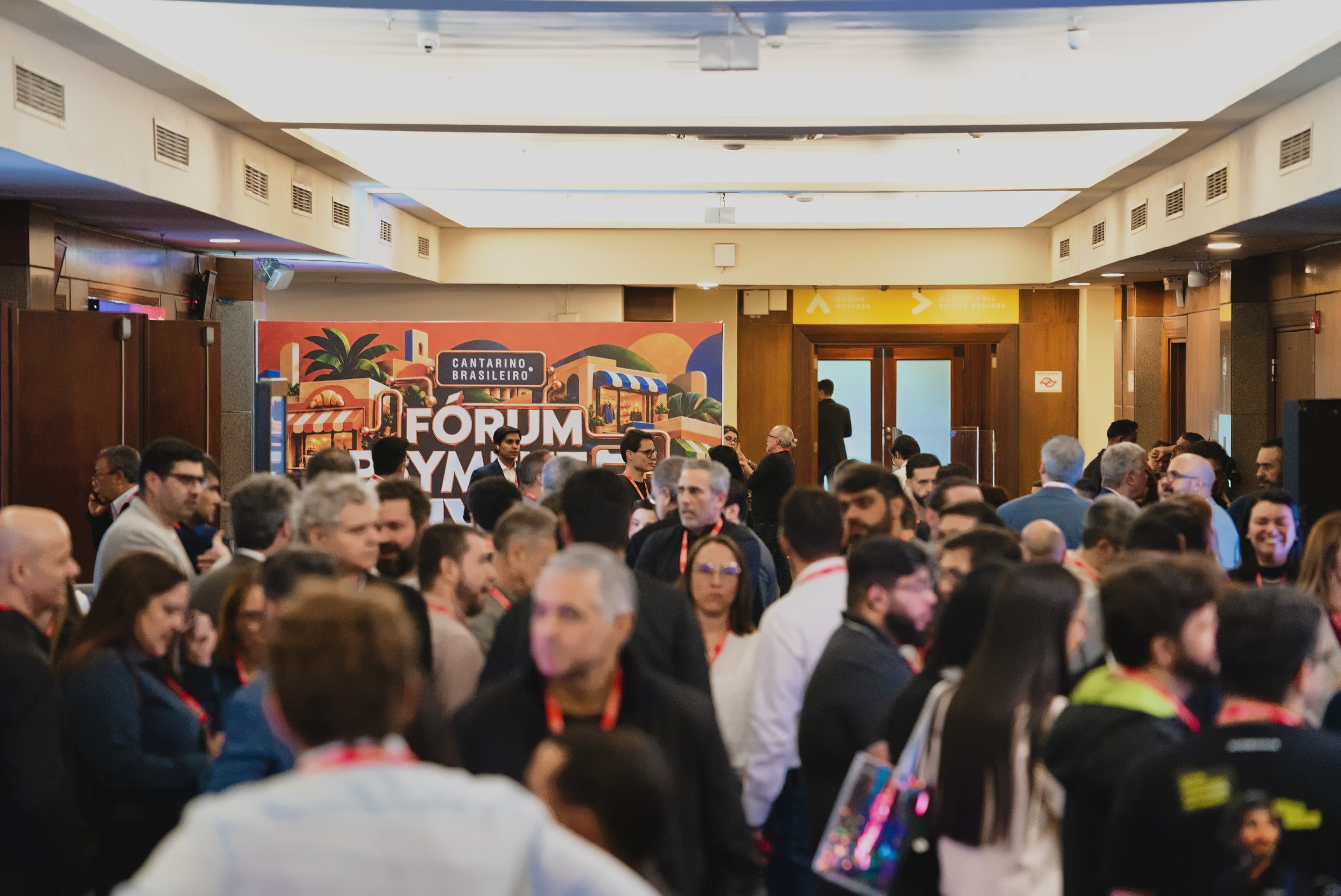
At a recent event on modernization organized by Times Brasil (exclusive licensee of CNBC) in partnership with IBM, Bradesco's senior technology superintendent publicly advocated for a case-by-case analysis between maintaining systems on the mainframe and migrating to new technologies.
The bank's position is: vital processes, such as financial transactions, should remain on the mainframe when that is the safest and most stable alternative. Secondary processes that can benefit from technology should be migrated without hesitation.
This type of public statement, coming from one of the country's largest banks, confirms something that many technology teams already know in practice: modernizing is about deciding, with technical criteria, what leaves, what stays, and why.
Agentic AI is changing the mainframe game
The speed gain that AI has brought to this decision-making process is the most impressive data point right now. According to the Bradesco's chief technology officer himself, the use of AI agents for reverse engineering and translation of legacy code (such as COBOL) already shows gains of up to 80% in execution time. At the same time, new code generation achieves up to 25% efficiency gain.
Continue reading and see use cases that demonstrate the gains, not only in speed but also in governance and security, that AI provides for the financial sector:
Legacy migration in days
In a project conducted by Squadra for the financial division of a global automaker in Brazil, the migration of three critical legacy systems, with over 200,000 lines of code, was made possible by using AI to analyze, understand, and document the entire legacy environment.
As a result, the total project time was reduced from 5 to 2 months, and the generated technical documentation, including architecture mapping, endpoints, and business rules, became an interactive and versioned knowledge base capable of answering the team's questions in real-time.
Integrating legacy systems without stopping the bank
Mergers and acquisitions in the financial sector bring a technical problem that rarely makes headlines: two (or more) legacy systems that need to communicate with each other, without interrupting the operations of either side.
During the entry of a global bank into the US market, the challenge arose to mitigate strategic risks, ensure access to critical information, adapt quickly to regulatory changes, and rapidly release new functionalities in operations with the Finxact system.
The result was the successful expansion of the bank's operations, with an increased customer base, optimized international transaction costs, and strengthened the institution's global competitiveness.
Software engineering as a competitive advantage
Two completely different types of banks, one traditional and one digital native, reached the same conclusion about where to invest.
Santander publicly describes software engineering as one of its three priority AI fronts (alongside process automation and conversational AI), as part of the group's global goal to generate €1 billion in AI gains between 2026 and 2028. According to the bank's global CDAIO, about 40% of Santander's code development worldwide is already done with AI support.
On the other hand, Nubank, a digital-native bank without the burden of inherited systems, announced an investment of R$45 billion in Brazil in 2026, with one of the four strategic fronts dedicated to the continuous development of artificial intelligence-based platforms.
Even though they start from opposite points, the two banks converge on the same objective: a solid enough engineering foundation to support real-scale AI, not just pilots.
The common pattern behind every successful transformation
Legacy, mergers, software, integrations. The use cases change, but the bottleneck is always the same: data, architecture, and engineering. This is precisely where Squadra has been building its work with financial institutions, with AI applied to the specific reality of each operation.
System modernization no longer has a finish line; it has become a continuous software engineering capability. The Genius AI Modernization journey breaks away from the rigidity of traditional projects.
If your bank is evaluating where to start, whether it's unlocking a legacy system, integrating a recent acquisition, or preparing the foundation to scale AI securely, learn about the Genius AI Modernization journey. Talk to a Squadra specialist and discover our cases.