
Changing the mantra is not a strategy
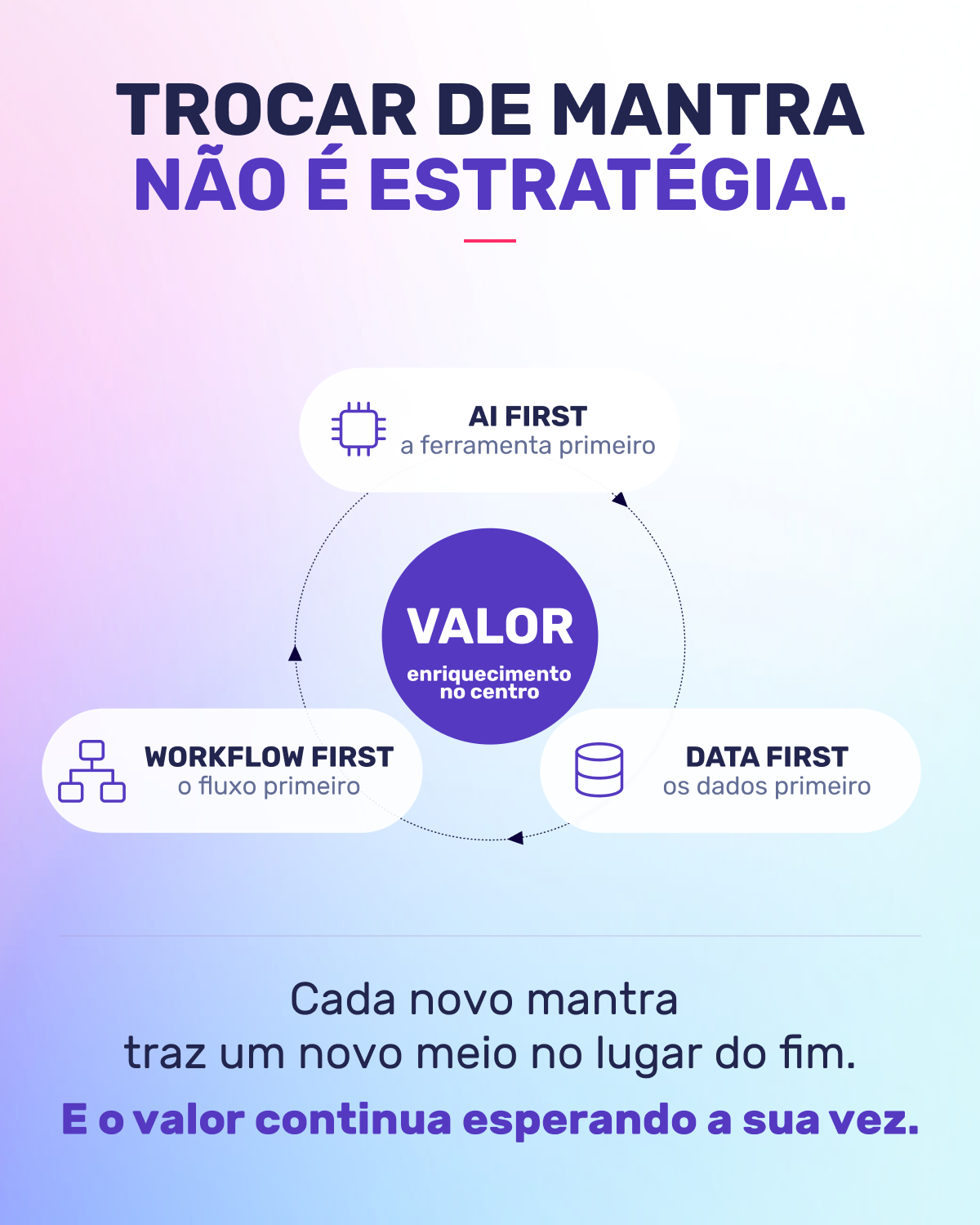
First it was AI first
“Put AI in everything, and value will come.”
It didn’t. Pilots multiplied, agents spread out, and the board’s question remains unanswered: what changed in the results?
Now, the market offers new mantras. Data first promises that, by organizing data, AI will work. Workflow first promises that, by redesigning workflows, value finally appears. Consultancies, vendors, and reports repeat these two formulas every week.
I see another pattern. Each new mantra brings a new means instead of an end. The tool, the data, the workflow. And value keeps waiting for its turn.
We’ve seen this movie before
Redesigning the workflow is redesigning the process by another name. In the 1990s, reengineering promised to reinvent companies starting from their processes. Processes were redesigned, and the silos remained where they were.
Data matters, a lot: AI doesn’t fix a weak foundation. But a company can spend years “tidying up the data house” without knowing which data will generate value. Without a destination, tidying up the house becomes an endless project.
The starting point is capability
Before the tool, the data, and the workflow, there is a simpler, and harder, question: what value does the organization need to produce, and what capability produces it?
Organizational capability, what the company needs to be able to do well, is the true object of transformation. It has a value to deliver, someone accountable for that value, and a baseline from which gains can be measured. Make this capability agentic, with AI working within it, and the conversation changes nature.
But transforming an organizational capability into an agentic capability doesn’t happen by mantra, nor by chance. It requires designing before building, measuring before and after, and reusing what has already been verified. It requires design discipline.
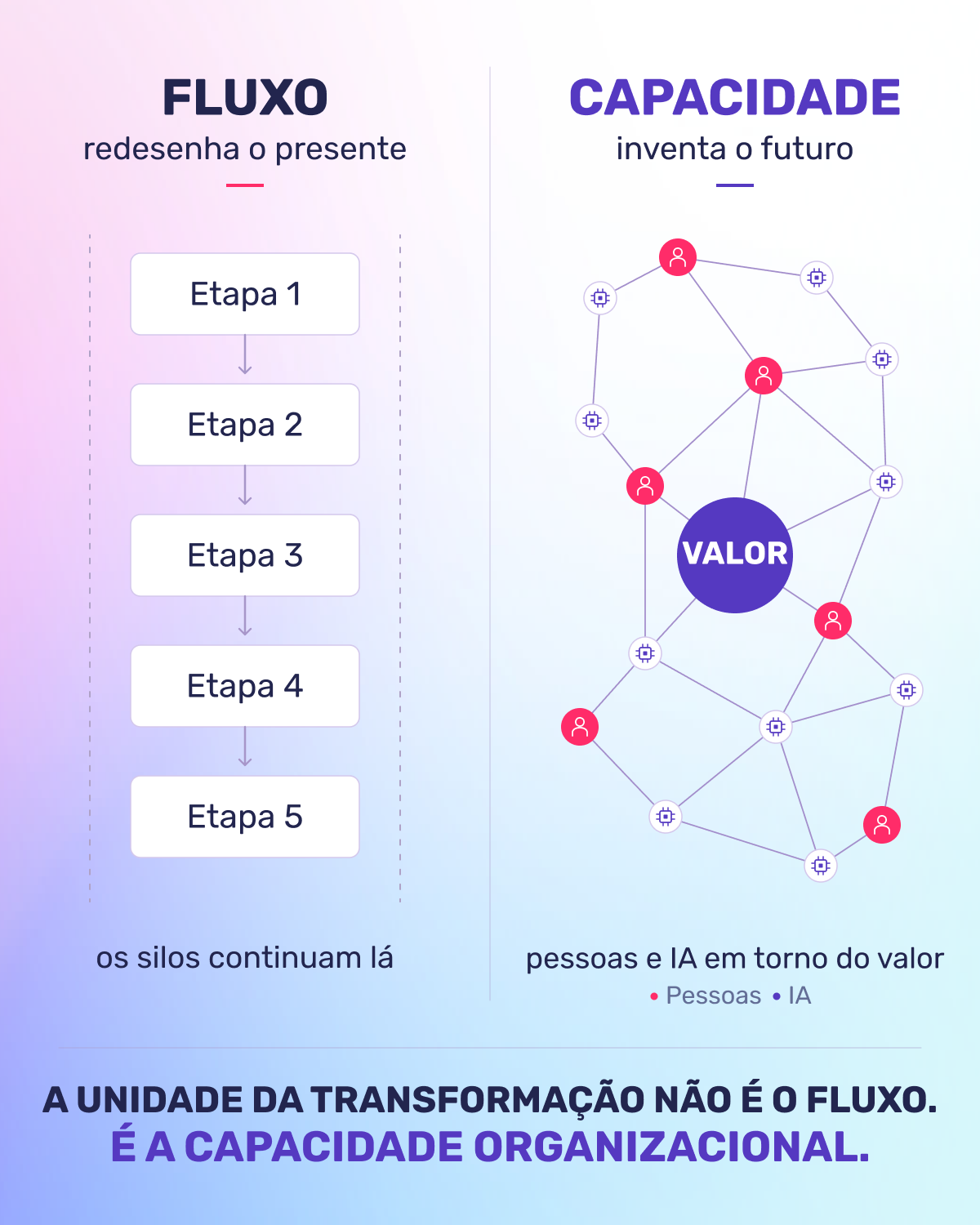
Redesigning the workflow improves the present. Designing agentic capabilities invents the future.
Agentic capability is an asset, not a project
A redesigned workflow solves a problem. A well-designed agentic capability becomes an asset: each time it is reused, it will cost less and deliver more. This is where AI stops having an isolated gain and starts accumulating gains, round after round of reuse.
I learned this over more than forty years of designing systems and organizations, from the telecommunications networks of the 1980s to today’s agentic transformation. And I’ve seen the effect in practice: when agentic capability is treated as an asset, gains grow by orders of magnitude.
ROI: snapshot or movie?
This even changes how returns are measured. The market treats ROI as a snapshot, calculated once per project. In an agentic organization, where agentic capabilities are designed from value, each agentic capability creates new agentic capabilities with each reuse, and the gain accumulates.
ROI stops being a snapshot and becomes a movie. It needs to be measured in an accumulated way, with each new use, starting from that baseline. Those who measure only the first round might find the agentic capability expensive. Those who measure over time will discover its true return.

And the people?
Agents can execute almost everything. But there are three things no mantra solves and no agent takes on: deciding the purpose, judging if the value was produced, and being accountable for the result.

The lights go out during execution. Never during design, nor accountability.
The next mantra is already on its way. The question is whether your organization will adopt it, and finally start with value, using method.
In your company, did AI start with the tool, the data, the workflow, or the value?
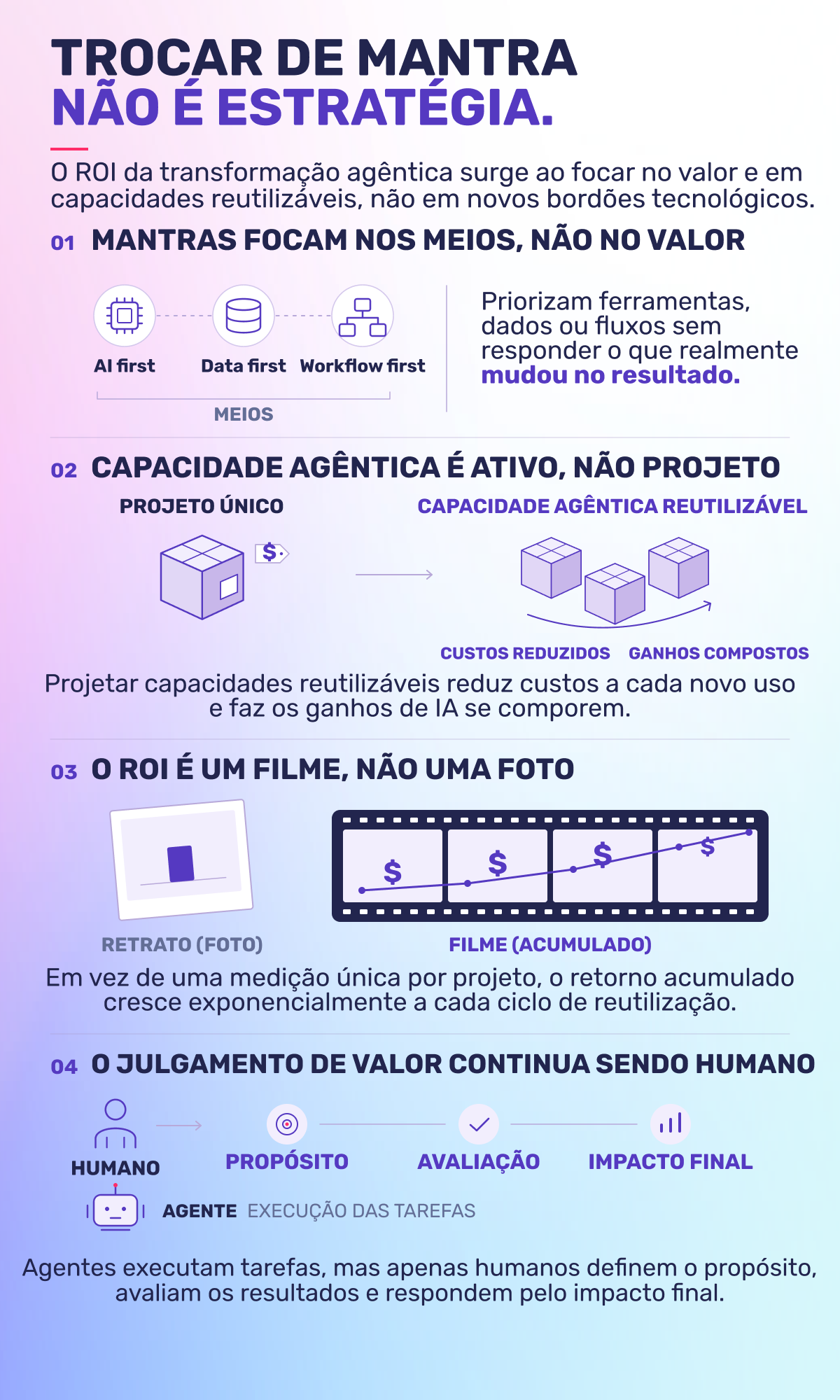
Check out the conceptual summary of the article in the infographic below:
Read also on LinkedIn.