

Each place in your thing
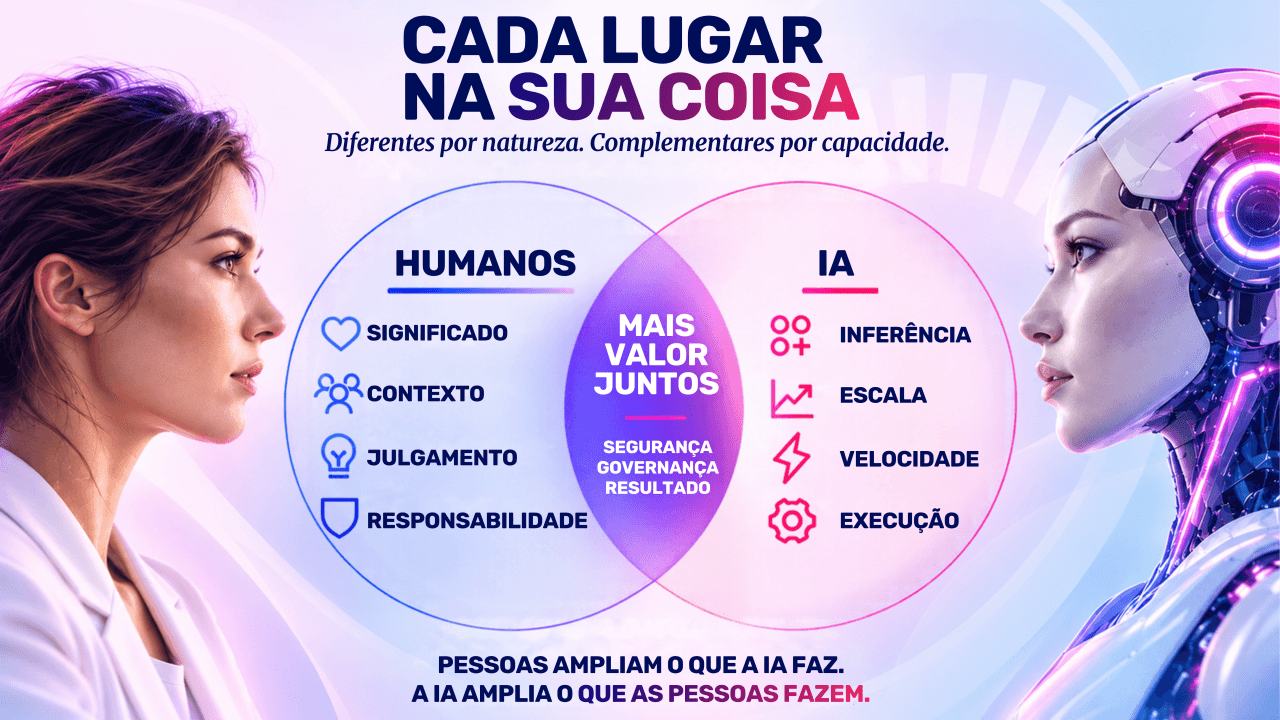
The title references the song of the same name by musician Sérgio Sampaio.
One prompt. Two chains.
Consider an extremely simple sentence. It functions as a microscope to see a difference that, in complex tasks, usually remains hidden.
“The capital of France is...”
A human can answer “Paris.” A large language model can too. The observable output is the same. The path that led to it, is not.
How the human arrives at “Paris”
In humans, the process begins with perception. The text can be seen, heard, or even evoked by memory; in all these cases, different signals can converge to the same meaning. Language is recognized, words like “France” and “capital” activate concepts, and these concepts are integrated into a proposition.
The decisive point lies in reference. “France” refers to a country; “capital” refers to a conceptual relationship between city and state. Concepts function as intelligent compression of experience: they condense observations, similarities, differences, and real relationships into units that can be mobilized by thought.
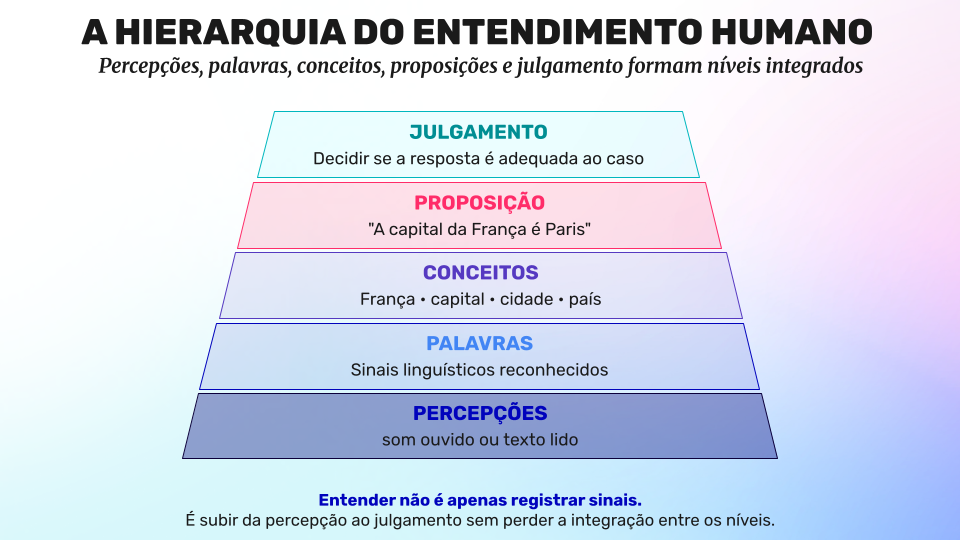
Figure 1 - The human path ascends from perception to judgment: perceptions, words, concepts, proposition, and decision on the answer.
The answer, therefore, is not just retrieving a word.
Attention selects what matters; working memory keeps the question active; long-term memory offers a repertoire; context helps define the appropriate way to respond. In the end, there is judgment: the subject decides they understood the question and that “Paris” is the appropriate answer.
How the LLM arrives at “Paris”
In the LLM, the same prompt follows a different chain. The text is segmented by a tokenizer into discrete units. Each token is assigned an ID and projected into a vector space by embeddings. The sequence passes through Transformer layers, where self-attention, MLPs, normalizations, and residual connections build successively refined contextual representations.
At the end of these layers, the current position is represented by a hidden state: a high-dimensional vector. This vector is not yet the word “Paris.”
The LM Head projects it onto the entire vocabulary and produces logits, i.e., scores for possible tokens. Softmax transforms these scores into a probability distribution; decoding selects the next token.
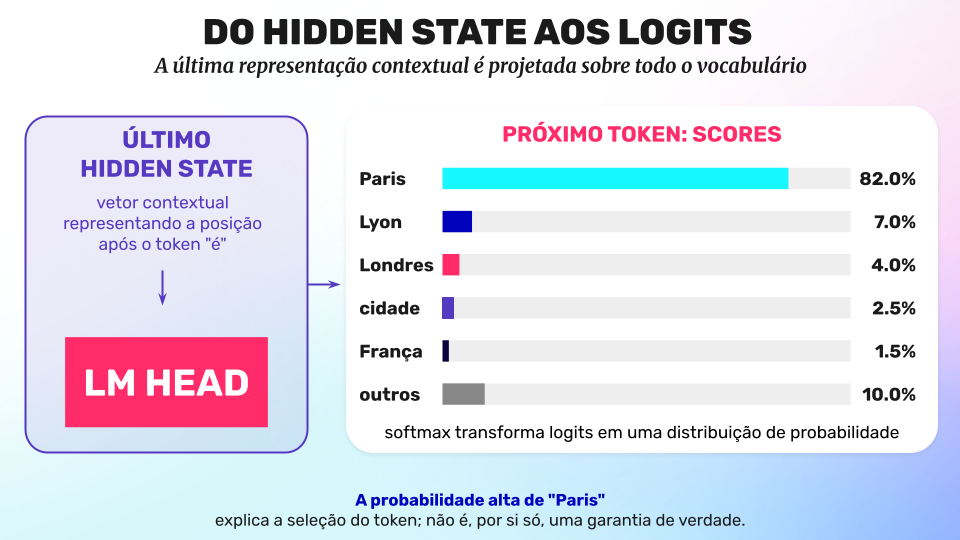
Figure 2 - From hidden state to distribution over the next token: the LM Head produces logits, and softmax transforms them into probabilities.
The next step deepens this “last mile.” Temperature, top-k, and top-p can make the choice more focused or more open; the process is autoregressive, so each generated token becomes part of the context for the next. Prefill and KV cache make generation more efficient by reusing calculations from the already processed context.
None of this diminishes the model's power. On the contrary: it explains how a probabilistic machine can perform linguistic transformations of enormous complexity. But it also establishes an important limit: high probability explains the token choice; it does not, by itself, constitute a guarantee of truth.
Same answer does not mean same knowledge
This is where the comparison ceases to be merely technical and gains organizational relevance. Human and LLM may end up with the same word. This does not mean they have followed the same causal, semantic, or epistemological process.
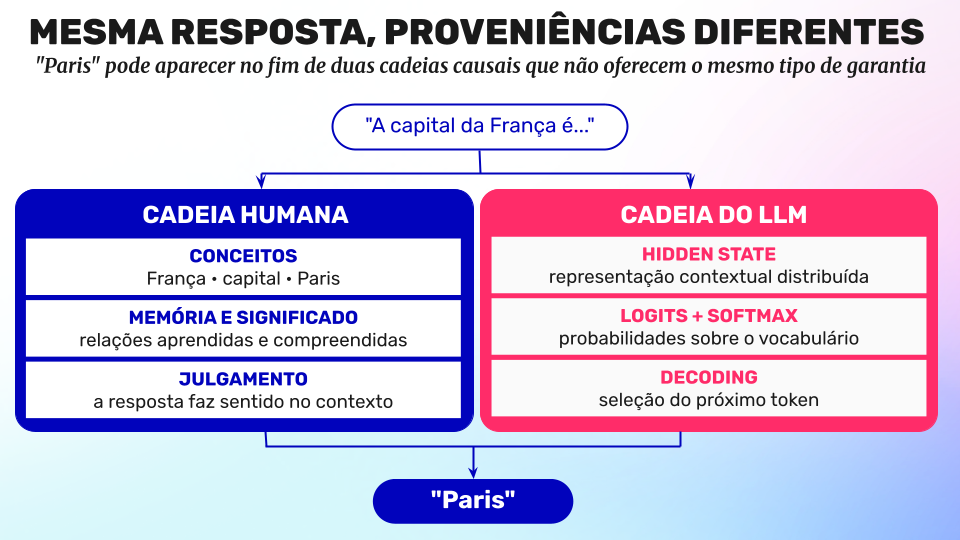
Figure 3 - “Paris” can emerge at the end of two different chains: one anchored in concepts, memory, and judgment; another in representations, logits, and decoding.
A correct answer can have different origins. A person may know, guess, or repeat something without understanding. A model may produce the correct continuation because learned patterns make that sequence extremely probable. From the outside, the string is identical.
For an enterprise architecture, however, output correctness, apparent confidence, and epistemological guarantee are not the same thing.
Fluency exacerbates this confusion. A model can err with elegant, confident, and coherent language. The textual surface produces a sense of authority, but the form of the response does not, by itself, reveal the quality of that statement's relationship with reality.
The semantic-epistemological boundary
The practical consequence is to transform this difference into an architectural principle. The question ceases to be “which of the two is smarter?” and becomes “where should each side assume responsibility?”
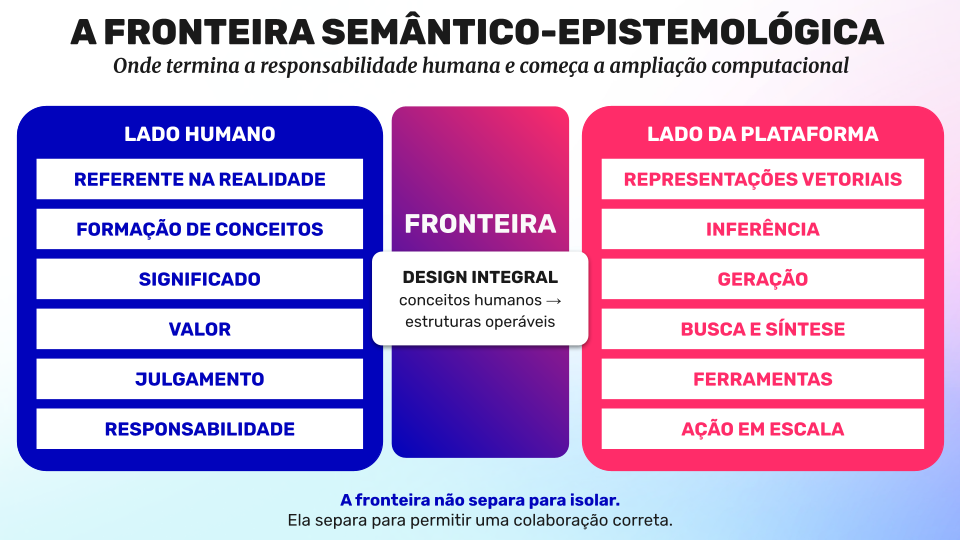
Figure 4 - The semantic-epistemological boundary separates responsibilities to allow collaboration: meaning and judgment on one side; inference and computational amplification on the other.
On the human side are references to reality, concept formation, meaning, value, judgment, and responsibility. On the platform side are vector representations, inference, generation, search, synthesis, tools, and scaled action. The boundary does not exist to isolate the parts; it exists to connect them correctly.
This distinction helps define autonomy. The greater the impact, irreversibility, and cost of error, the greater the need for evidence, validation, traceability, and explicit human responsibility. In low-risk tasks and stable criteria, computational autonomy can grow.
The boundary, therefore, is not fixed: it must be designed and revised in light of evidence.
From PoC to enterprise capability
This is where this discussion directly connects to organizations' difficulty in moving beyond the PoC.
A PoC normally demonstrates model capability. An enterprise capability needs to demonstrate that people, models, context, evidence sources, tools, limits, and validation mechanisms operate together reliably.
When the architecture positions each capability in its proper place, AI ceases to be just a generation tool and becomes an amplification infrastructure. The human preserves meaning, direction, criteria, and responsibility. The platform amplifies inference, search, synthesis, generation, speed, repeatability, and execution.
It is from this composition that both hyper-productivity and hyper-quality can emerge: more validated value per unit of human effort and more economically viable critique, testing, and verification per unit of result.
Security and governance cease to be afterthoughts and become part of the collaboration design itself.
The next leap does not depend solely on better models. It depends on better collaboration architectures.
The goal is not to make humans behave like machines nor to demand that machines replicate the human process.
It is to deliberately, verifiably, and responsibly combine distinct natures to transform technological potential into real value.
Models evolve faster than many organizations can transform this potential into results.
PoCs multiply, demos impress, and new capabilities appear with each cycle. But a gap remains between proving that a model can produce an output and building an enterprise capability that operates reliably, securely, governably, and responsibly.
Part of this gap lies in how we design the relationship between humans and AI.
Instead of trying to bring two intelligences closer until they seem equivalent, it is worthwhile to understand precisely where they differ—because it is precisely from this difference that a new, much stronger, and highly beneficial collaboration arrangement for the business emerges.
Read also on LinkedIn.