From idea to screen: creating videos with AI
Audiovisual production has always required a combination of creativity, planning, and technical resources. In the corporate environment, transforming complex information into clear and engaging videos also involves challenges related to deadlines, costs, and tool availability.
It was from this need that I began to explore how artificial intelligence could contribute to the creation of audiovisual content for Squadra.
The goal was not simply to automate steps, but to find ways to produce materials with more autonomy, agility, and creative freedom, while maintaining the quality and identity of the communication.
From idea to production: experimenting with new possibilities
One of the first practical applications occurred during the production of a case study video for the Elizabeth Glaser Pediatric AIDS Foundation (EGPAF).
The challenge was to present a complex technological solution in an accessible way, using visual storytelling to facilitate audience understanding.
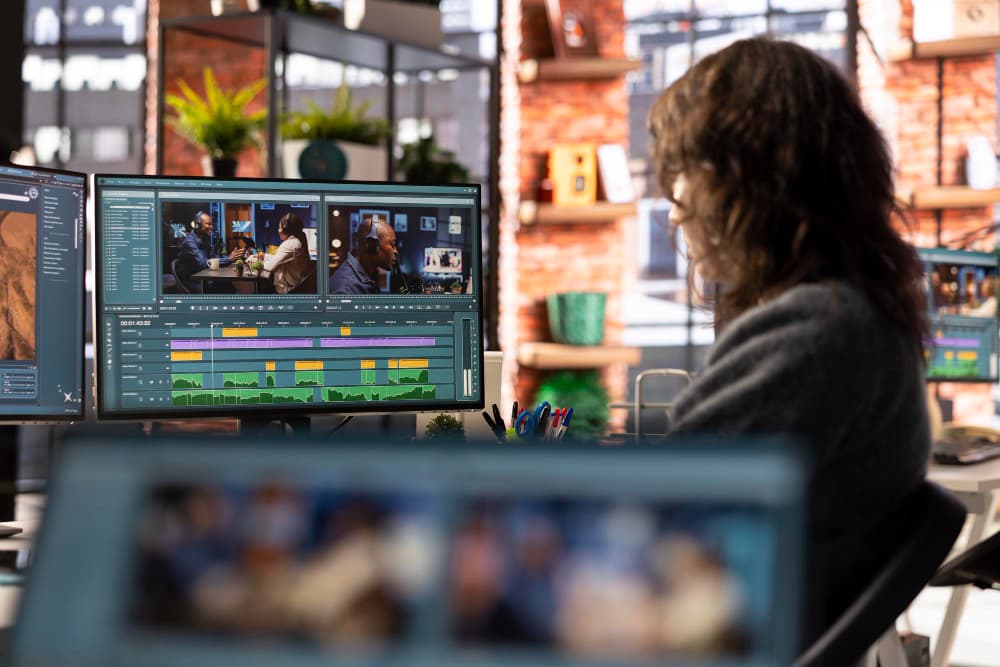
To achieve this, I developed a production process divided into stages, starting with the script and storyboard creation, moving through image and animation generation, and ending with voiceover and final editing.
Tools like Gemini and Google Flow were part of this process, allowing us to explore different visual possibilities, develop scenes, and make adjustments to maintain narrative consistency.
One of the main differentiators was structuring the production scene by scene, ensuring greater control over visual elements, movements, and the message conveyed.
The result was a production completed within one to two weeks, for a scope that, by traditional methods, could have taken up to three months.
More than just reducing time, the experience showed that AI could enhance our ability to transform ideas into audiovisual content.
When a challenge becomes a new solution
During these experiments, I identified another recurring need: generating voiceovers with natural voices, different intonations, and customization options.
The available tools did not always offer the necessary flexibility, especially for working with Brazilian accents and adjusting the emotion conveyed by the voice.
This is how Studio Squadra Gemini TTS came about, an experimental application developed in Google AI Studio, using the Gemini Flash model and prompt engineering.
The tool allows transforming text into customized voiceovers, adjusting characteristics such as accent, speed, intonation, and communication style.
One of the first applications was in the production of Squadra's institutional video for Customer Day.
Still in the testing phase, the initiative opens up possibilities for making voiceover creation more accessible and expanding its use in various communication demands.
Technology expands possibilities. Creativity directs.
Throughout this journey, one of the main learnings was realizing that using artificial intelligence does not mean abandoning creative direction.
On the contrary, the more possibilities the tools offer, the more important it becomes to know what we want to communicate, how we want to communicate it, and what outcome we expect to achieve.
Squadra provides a safe environment to experiment, test ideas, and share learnings, AI Fluency, showing that experimentation can start with real daily challenges and evolve into solutions that benefit businesses.
AI does not replace my creative process. It expands the possibilities of putting it into practice.