SQUADRA and MRS, together creating a new future for railway logistics
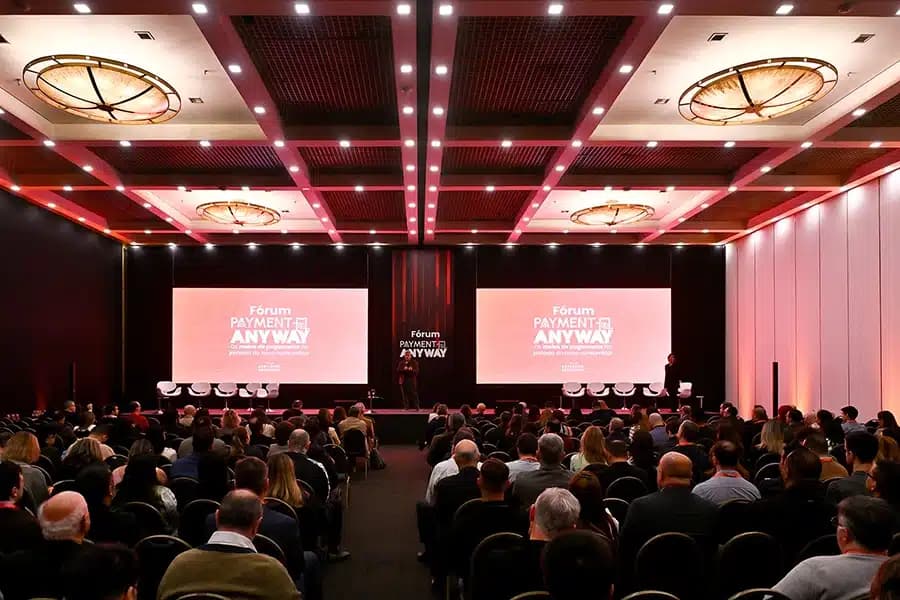
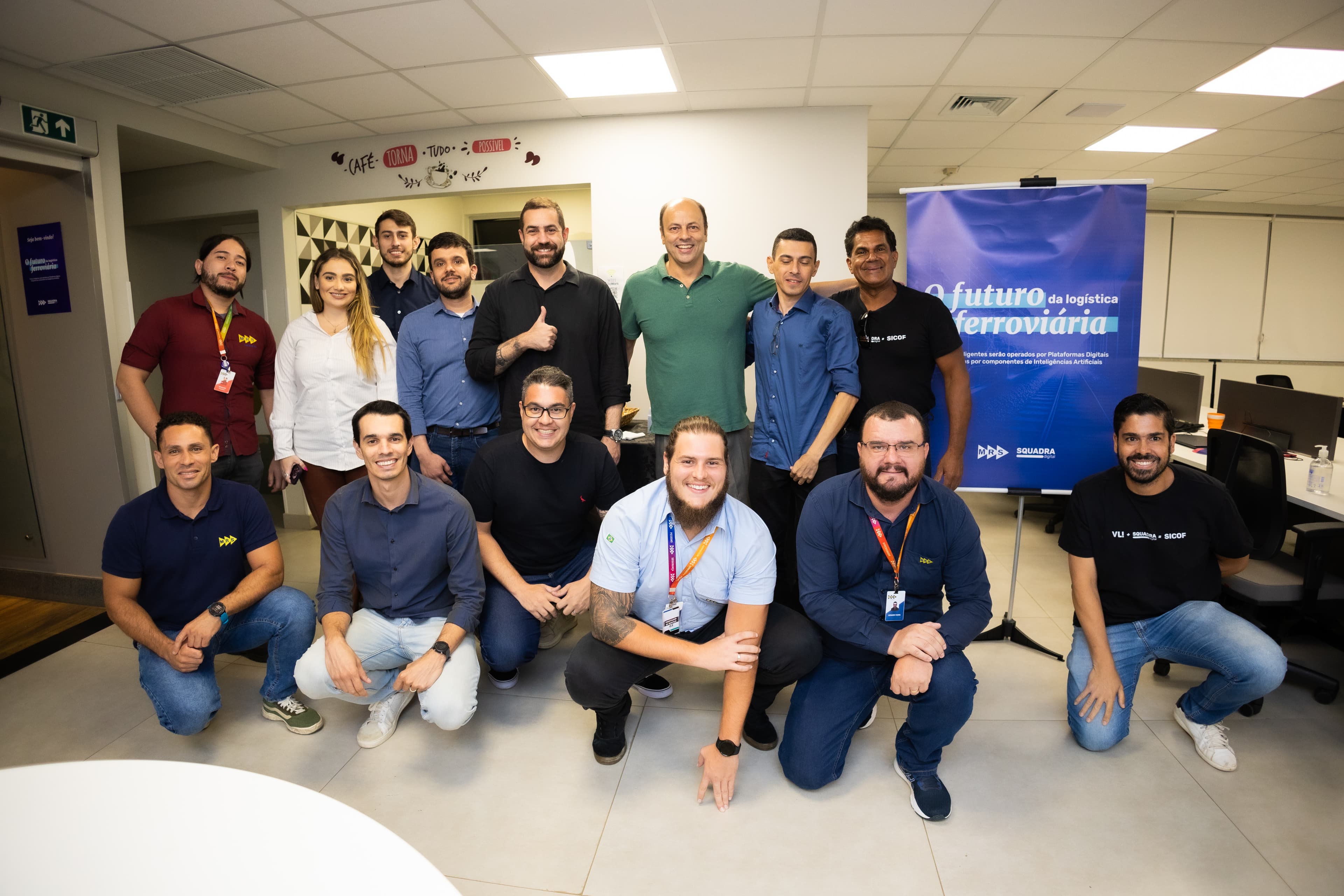
We met with the MRS team, between March 13th and 14th, at our headquarters in Belo Horizonte for a meeting with the objective of exploring how agility and digital solutions are revolutionizing the railway world.
We brought together teams from both companies to exchange ideas on how innovations in artificial intelligence, geographic intelligence, FinOps, hyperautomation, and agile structures can enable a more competitive and efficient railway system.
The railway sector is undergoing an accelerated digital transformation. Companies that adopt these new technologies strategically will be able to optimize processes, reduce costs, increase safety, and improve the customer experience.
In this event, we understood how these innovations are groundbreaking, what benefits they bring, and how we can jointly build an increasingly connected, sustainable, and intelligent railway ecosystem.
AI and Railways
Artificial intelligence (AI) is rapidly transforming railways. We had a presentation by Paula, CEO of GOTODATA, a company belonging to the Venture Builder of SQUADRA, showcasing the power of AI in railway operations and logistics.
By analyzing enormous volumes of data from sensors on railway networks, AI can optimize operations, predict failures, and recommend actions to improve safety, efficiency, and reliability.
"The more I understand the problem, the more low-code tools and AI can help. AI comes as an opportunity for all of us." — Romulo Cioffi
Some important use cases for AI in the railway sector include:
Predictive Maintenance: AI analyzes data from locomotive and track sensors to identify anomalies. It can predict failures and recommend preventive maintenance. This avoids unplanned downtime and disruptions.
Network Optimization: AI software leverages traffic and infrastructure sensor data. It can then optimize logistics and freight scheduling to improve capacity utilization. Dynamic routing further enhances responsiveness and efficiency.
Anomaly Detection: Video analysis with computer vision monitors railway sites. AI detects trespassers, vandalism, obstructions, and more. Early detection improves safety and security.
Autonomous Inspection: Autonomous inspection of tracks, bridges, level crossings, and overhead lines. Automating inspections increases safety and asset management.
The application of AI offers several benefits:
Increased capacity, reduced congestion
Improved punctuality and customer service
Greater asset utilization and availability
Reduced operational and maintenance costs
Enhanced safety and security
With predictive insights from AI, railways can optimize planning and fully leverage assets. This drives greater efficiency, sustainability, and competitiveness.
Geographic Intelligence
Marcus Couto, Delivery Manager at SQUADRA, led the discussion on Geographic Intelligence for the benefit of railway companies.
Geographic Intelligence is a vital tool for railways to harness the power of location data and intelligence to optimize networks. Key capabilities enabled by geospatial solutions include:
1. Infrastructure Mapping and Asset Management
Detailed GIS maps overlay railway infrastructure, such as tracks, signals, yards, stations, and facilities, with terrain maps and other geographic datasets. This provides a data foundation for visualizing, analyzing, and managing dispersed railway assets and inventories.
2. Real-time Operations Monitoring
By integrating real-time sensor data from trains, track equipment, and other assets with geospatial systems, railway operators gain enhanced visibility into the current status and conditions of the network. Location intelligence reveals bottlenecks, incidents, and other issues for rapid response.
3. Planning and Simulation
Modeling geospatial factors aids in capital planning for railway expansion and improvement projects. Simulations incorporating terrain, natural hazards, engineering constraints, and other location-based variables enhance the safety, resilience, and ROI of infrastructure investments.
FinOps Optimizes Cloud Costs
Rodrigo Dias, Head Of Corporate IT at SQUADRA, shared how FinOps brings financial accountability to the variable cloud spending model, empowering railway companies to maximize their cloud ROI.
Key aspects of FinOps include:
Cloud Cost Visibility and Allocation: FinOps provides transparency into cloud usage and spending, with dashboards to visualize spend by business unit, application, or cost center. This enables accurate allocation of cloud costs.
Cost Optimization: Analyzing cloud usage patterns and right-sizing workloads lead to significant savings. Setting spending guardrails and automation rules prevent over-provisioning. Reserved instance purchases also reduce compute costs.
Cloud Budgeting and Forecasting: Understanding seasonal traffic variations allows for more accurate cloud budgeting through monthly/quarterly plans. Predictive analytics forecast future spend based on planned projects.
Cloud Governance: Cloud policies, tagging standards, and access controls minimize shadow IT sprawl and cost overruns. Enforcing checks on high-risk services limits unauthorized usage.
As railway companies pursue large-scale cloud adoption, FinOps will be crucial for maximizing returns on these cloud investments while keeping budgets in check.
Hyperautomation in Daily Railway Operations
Hyperautomation helps automate not only simple repetitive tasks but also complex and long orchestrated workflows. Henrique from Wblio, a company belonging to the Venture Builder of SQUADRA, notes that for railways, hyperautomation can automate processes such as rolling stock maintenance, demand forecasting, network optimization, scheduling and dispatch, locomotive refueling, real-time tracking, etc.
Some key benefits of hyperautomation for railways:
Increased efficiency and throughput through automation of repetitive tasks.
Improved asset utilization by optimizing fleet maintenance, predictive diagnostics, and scheduling.
Better demand forecasting and capacity planning using AI and predictive analytics.
Enhanced process quality and safety through data-driven decision-making and control of railway operations.
Reduced costs and better resource management through process automation and lean operations.
By combining intelligent technologies such as process automation, machine learning, and process mining, hyperautomation helps railways transform digitally and achieve new levels of operational excellence.
Agile Railways
The adoption of agile methodologies is transforming how railway projects are delivered. Traditionally, railway initiatives have followed rigid waterfall approaches with fixed scopes and long timelines. However, as railways better respond to changing customer needs and market dynamics, agility has become a competitive advantage.
The event on March 13-14 held at SQUADRA's headquarters highlighted the many ways digital technologies are revolutionizing the railway industry. Throughout our time together, we were able to delve into important topics and gain a better understanding of how these innovations can enable more agile, efficient, and competitive freight railways.
We thank the MRS team for their presence and exchange during the two days of the event. Both companies share enthusiasm for leveraging cutting-edge solutions to transform this vital transportation sector.
We must also thank VLI Logística, our long-standing partner, represented at the event by Oldemar Godinho, who shared the success story of the Sicof project. We transformed the railway operating system to improve efficiency and control, observing process optimization, prototyping of more user-friendly screen interactions, and short delivery cycles. This transformation of legacy systems through modularization, design architecture, training, and agile management practices, along with performance data, led to greater efficiency, performance optimization, standardization, and portability for the system, making it independent, functional, and with centralized operational control.
See the complete VLI SICOF case here.
"It was a very big challenge, as we have dozens of peculiarities in transportation" — Oldemar Godinho Filho, PO of the Project
The potential of AI, advanced data analytics, automation, and other technologies to optimize railway operations is immense. What we have envisioned so far is just the beginning. We hope to leverage the relationships and knowledge developed at this event to drive digital transformation and create the next generation of railway logistics.
The future is bright, and we are excited to innovate it together with partners like MRS.